
Halloween is just around the corner, but I bet Englishman Graham Barratt’s pumpkin is larger than the one sitting on your front porch. He needed a truck and a forklift to bring his 1000-plus-pound pumpkin – a “personal best” – to the annual UK National Giant Vegetables Championship in September.
Barratt’s massive pumpkin didn’t set a world record, though. That honor went to his 25-foot-tall cucumber plant, along with six other fruits and veggies others brought to the same event. State and regional fairs have been weighing produce for decades, but these farmers in England are serious.
But not so serious that they won’t give away a few secrets.
“It’s a case of feeding the soil” as it becomes depleted during the growing process, Barratt says. For that, he uses liquid seaweed – something I bet few of us non-farmers would ever have guessed.
But here’s the part that amazes me: Some 65,000 people left their cozy couches to attend this one event. To see giant fruits and vegetables. That turnout says less about giant produce than it does about us: People will create the craziest reasons to get together.
And giant vegetables aren’t the only unlikely excuse for a crowd.
Here’s another.
How many of us get out of the car after parallel parking and check how close we are to the curb and to the bumpers of the cars in front and behind us? Even when we know we’re in the spot, we check to see how well we did.
And when you get really close to the curb without touching it, doesn’t a tiny part of you wish someone else was there to witness your brilliance?
Drivers tend to be either very skilled at parallel parking – or determined to avoid it altogether – so a precise parallel parking job feels like it should come with bragging rights.
Feeding off this innate need to show off our skills, a handful of parallel parking competitions have sprung up across the country in recent years. Drivers compete to see who can get into the spot the fastest and closest to the curb without hitting it – or the cars in front or behind. Sometimes organizers add man-made distractions and crowd noise for extra pressure.
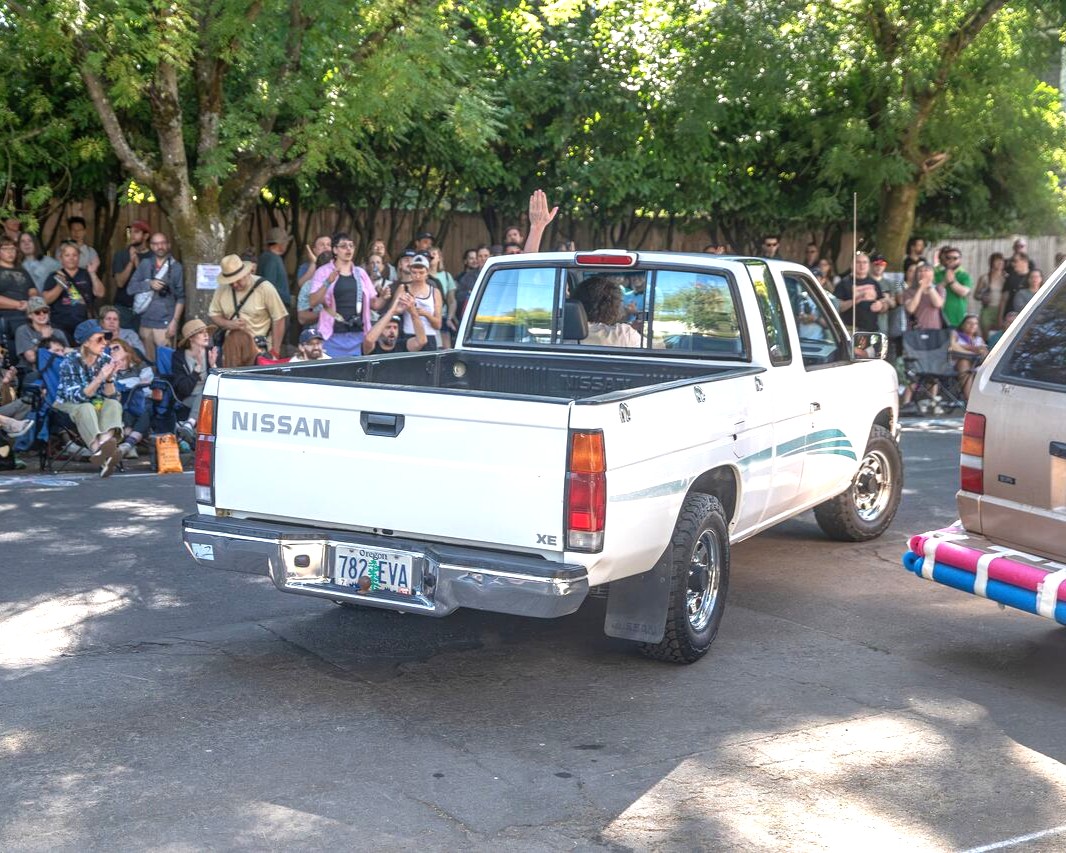
At Portland’s parking competition, backup cameras are strictly prohibited, so the 80 competitors go old school, using only their mirrors and proper technique to slide their cars into the spot.
Hundreds of people bring lawn chairs and line a city street – to watch people parallel park. Something they could see any day of the week. But doing it while wearing orange traffic cones on your head, with your dog and neighbors beside you, turns an everyday skill into a fun communal event, no matter who takes home the gold spray-painted miniature Subaru trophy.
Sometimes, though, the thing that brings people together isn’t a showy public event at all. It’s something they can share from home.
That was especially true during the COVID shutdown in 2020, when many quarantined Americans turned to sourdough bread baking to occupy themselves during the global crisis. But baking bread from a starter of yeast, flour and water isn’t exactly a modern practice.
For decades, Carl Griffith of Oregon nurtured the sourdough starter he said his great-grandmother created back in 1847 when her family ventured west from Missouri to settle near Salem, Oregon. Over the years, he even shared dried samples of it with anyone who sent him a self-addressed, stamped envelope – and a small community formed around the starter.
After Carl died in 2000 at age 80, a small group of his online contacts who call themselves “Carl’s Friends” took over the cause. Since then, they’ve shared the sourdough starter with more than 100,000 people worldwide.
That’s a lot of bread from one pioneer starter.
The starter is “strong” and “stable” and produces a solid sourdough loaf, but so do other starters. What draws people in is the pioneer story and the chance to be part of something bigger. Just like the giant vegetable and the parallel parking competitions.
YOUR IMPACT THIS WEEK
Humans are wired for connection, even for a giant pumpkin, a near-perfect parking job or a legendary sourdough starter. Long ago, living and working in groups helped us survive. Strong social ties are still good for our health – but now, gathering is also just plain fun.
So if the usual book club, mah-jongg group or community sports team isn’t your thing, start with something you really enjoy. Find a few people who love it, too, and make a plan to do it together. A shared interest is all the occasion you need.
The activity is only the excuse. What matters is showing up and finding your people.
Please share this post with your people and remember you – and your unique interests – matter!
(Photo/Mark Graves-The Oregonian-Oregon Live)
