
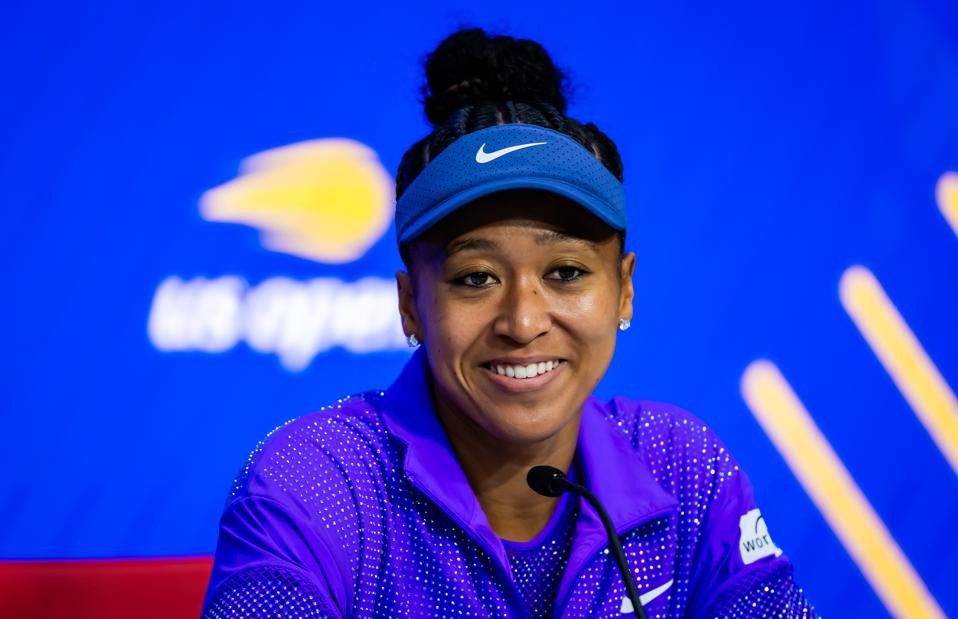
When her dreams of winning a fifth Grand Slam tennis tournament were dashed after her loss to Amanda Anisimova in the 2025 U.S. Open semifinals last week, Naomi Osaka just smiled.
“I don’t feel sad…I just feel like I did the best that I could.”
This more relaxed version of Osaka has been years in the making.
But she’s been worth the wait.
Born in Japan to a Japanese mother and Haitian father, Osaka came to the United States with her parents at just 3 years old and started playing tennis immediately. As she got older, homeschooling made it possible to practice up to 8 hours a day, with her father as her coach.
Tennis clearly wasn’t just a side hobby.
She entered tournaments as her talent developed, but Osaka largely flew under the radar. She felt pressure to play well for her parents, but not much beyond that.
No one outside her immediate bubble paid much attention to whether she won or lost.
Because she lived her childhood mostly out of the spotlight, Osaka wasn’t prepared for the intense attention that came when she defeated tennis mega-star Serena Williams at the 2018 U.S. Open final. That win made Osaka the first Asian to ever reach number one status and an overnight superstar at age 23.
But instead of being excited, the soft-spoken (and sometimes socially awkward) Osaka was completely overwhelmed. Suddenly everyone cared about how she played. Interviewers struggled to get her to come out of her shell.
Sleep issues from nerves plagued Osaka, especially during competitions. She felt pressure to win every tournament to prove the U.S. Open wasn’t just a fluke.
A year later in the 2019 U.S. Open, Osaka beat then 15-year-old U.S. phenom Coco Gauff in the Third Round. Osaka recognized the pressure the teary Gauff felt and wanted her to leave the court proud of what she’d accomplished even though she’d lost. In a rare joint post-match interview, a gracious Osaka praised Gauff and her parents for a job well done.
Her joy quickly faded as Osaka went on to lose in the Round of 16. Ultimately, the pressure got to her and she couldn’t defend her championship. She felt lost.
Despite the loss, though, her superstar status and the world’s high expectations continued, especially across Asia. Mentally, she needed to take a break but didn’t know how. If she stepped off the hamster wheel, wouldn’t she let everyone down?
Osaka’s personal worth felt so tied her performance that she started wondering: “What am I if not a good tennis player?”
In the off season, she started designing fashion as a fun outlet completely unrelated to being an athlete. She did her own sketches and walked the runway in heels – a nerve-wracking but exciting type of pressure.
Professionally, Osaka hired a new coach who focused on who she really was at her core and worked from that place in her tennis. She and her team hoped the new strategy would pay off.
Then tragedy struck. Basketball superstar Kobe Bryant, a close personal mentor to Osaka, was killed in a plane crash.
When Osaka lost her Third Round match in the 2020 Australian Open around the same time to Coco Gauff, she felt like she let Kobe down by not winning because she was “mentally weak.” She couldn’t “do what [she] was supposed to do” for her coach and her support team. Again, she was overwhelmed.
She started to wonder what would happen if tennis just went away. Maybe tennis wasn’t the most important thing in world, no matter how much she liked it.
Then COVID hit. The Black Lives Matter movement gained traction. In spite of pressure to maintain a “squeaky image” and “not get into any controversy,” she started to find her voice.
To honor her black heritage, she joined the many professional athletes who boycotted playing their respective sports in protest of the marginalization of black people in the U.S. and beyond. Osaka was the lone professional tennis player to do so.
To honor her Japanese heritage, Naomi gave up her U.S. citizenship to play for Japan in 2020 Olympics, which didn’t sit well with some of her fellow Americans.
At the August 2020 U.S. Open, Osaka wore seven different face masks during the tournament with the names of African Americans who’d been killed by police to raise awareness for the issue so many were protesting. With empty stands due to COVID restrictions, she was off her game at first but came back to win the tournament.
She was finding herself again, but her struggles weren’t over.
In 2021, Osaka withdrew from the French Open and struggled in the Olympics and the U.S. Open. She shocked the world when she walked away from the sport “indefinitely” to focus on her own mental health journey.
By age 23, she’d won an impressive four Grand Slam titles, but her tennis future looked uncertain. Many wondered if she had what it takes to be in the top tier of tennis after all.
But time and a little perspective can work wonders.
With all the pressure off and a new baby daughter in her life, Osaka watched the 2023 U.S. Open from the stands as a spectator. A yearning stirred inside her.
What if she could play again, but in a different way? Ignoring the naysayers, she started training and then competing again, determined to see what she could do.
Now at 27, Osaka has come back to tennis happier and more grounded. She smiles and laughs when she’s playing, even when she makes a bad shot. She designs the unique outfits she plays tournaments in and shows off the stuffed Labubus that hang on her duffle to interviewers. Just a few years ago, those things would’ve seemed impossible.
She still works hard at tennis, but she’s stopped taking it all (and herself) quite so seriously. Being her true self off the court yields more consistent play on the court – a win/win for everyone. She’s now ranked No. 14 in the world and climbing.
Osaka is finally coming into her own and it’s fun to watch.
“Honestly, [the 2025 U.S. Open semifinal loss is] kind of inspiring for me because it makes me just want to train and try to get better, and hopefully just give it my very best shot again and see what happens. But I think I can’t be mad or upset at myself.”
Turns out she has what it takes after all.
We just need to let her show it.
(Photo credit Robert Prange/Getty Images)
