
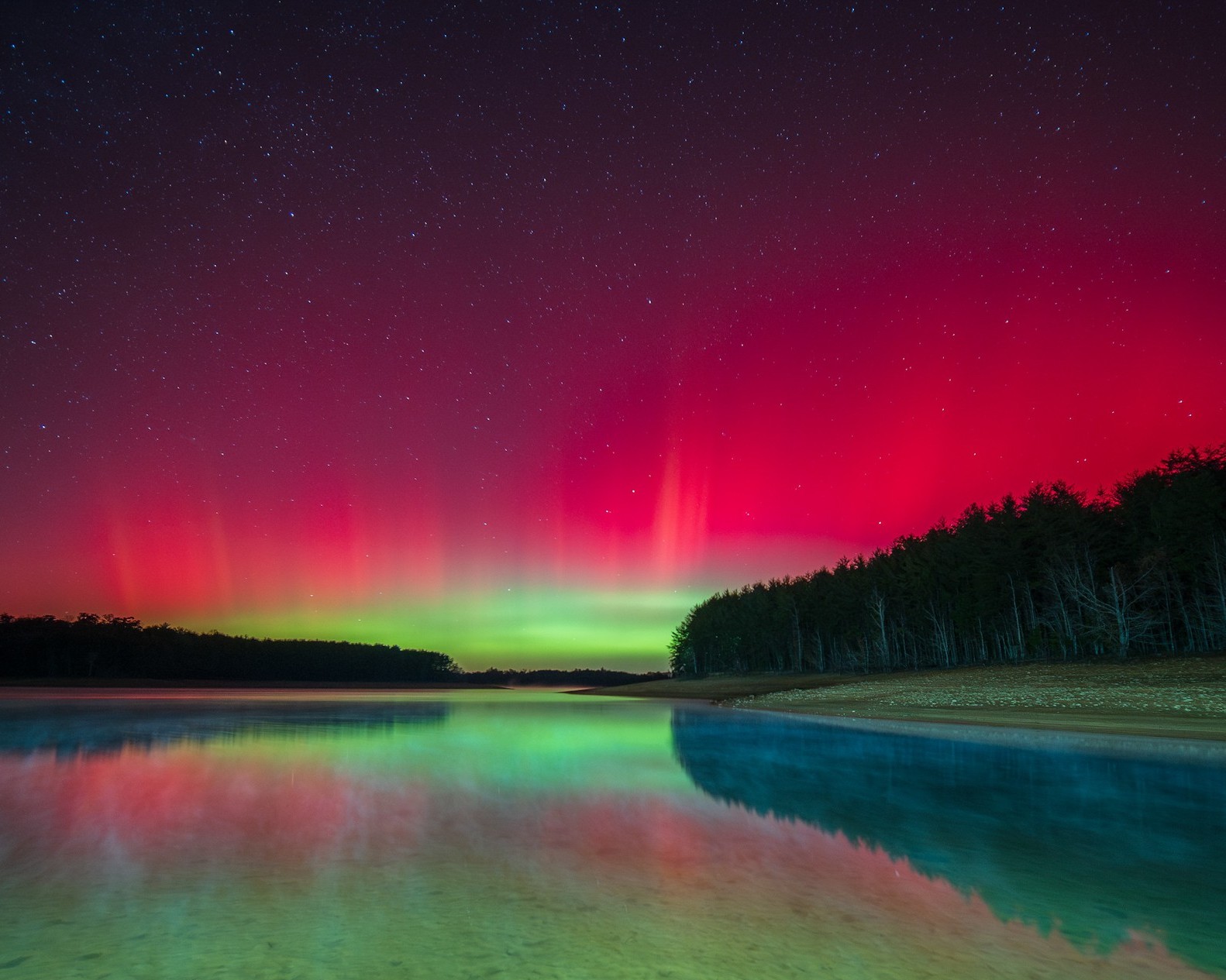
About a month ago, something extraordinary happened in Georgia.
Brilliant shades of pink, green and yellow flashed brightly across the sky. The aurora borealis, a spectacle usually reserved for the far north, paid an unexpected visit to the South.
The brief wonder of the Northern Lights
To create the light show we see, the sun releases energy particles through solar flares that travel across space and collide with gases in the Earth’s atmosphere. These collisions release their own energy, creating colorful, dancing lights in the night sky.
The Earth’s magnetic field usually pushes these reactions toward the poles, so that’s where they’re most visible. But last month, an especially powerful solar flare messed with the Earth’s magnetic field just enough that people in places much further south could also experience the wonder.
Awe-struck Southerners stood outside in their pajamas to witness it. Social media was flooded with photos. For many, it was their first time witnessing such a phenomenon. The experience felt almost magical.
The surprise burst of color was a gift, reminding us that even the longest nights can be brightened by moments of awe. And that beauty can appear where we least expect it, especially in the darkness.
Star light, star bright
Years ago, I visited Alaska in December. The days were short, with about four hours of light midday before darkness set in again. We woke up in the dark, ate in the dark, and went to sleep in the dark. During an Alaskan winter, if you limit your activities to daylight hours, you won’t be doing much. But it felt strange to us visitors accustomed to more sunlight, even in December.
We travelled one day into the nearby mountains, away from the city lights, into more darkness. The night sky glowed brilliantly. With less artificial light pollution, the stars put on their own show so stunning it almost didn’t look real. More stars than anyone could count, shining in all their glory – we just had to put ourselves in the position to see them.
Sometimes, darkness is where beauty shines.
The promise in the winter solstice
This Sunday, December 21st marks the longest night of the year for all of us in the northern half of the globe. Many of us dread the early sunset, but many cultures actually celebrate this turning point in the season, honoring the return of the sun as each day starts to get just a little bit longer.
There’s a promise of brighter days ahead, a reassuring hope that comes from knowing that light always follows darkness.
People as lights in the darkness
In times of uncertainty or hardship, it’s easy to feel overwhelmed by darkness. But light often emerges in unexpected ways – through nature and through people.
Sharing a word of encouragement when your neighbor is having a tough day, inviting a friend to share a meal, laughing with a stranger at something funny you see on the street – these are the moments that bring warmth and connection. At the holidays and every day, we each can be lights in the lives of others, offering kindness, understanding, and hope.
Reaching out to make a personal connection can transform someone’s world, including your own.
Illuminating the world together
Whether it’s the rare sight of the Northern Lights in Georgia, the beauty of an Alaskan winter, or the deep symbolic hope found in the winter solstice, we’re reminded that darkness is never complete.
True light comes from people – their compassion, support, and willingness to connect. As we move through winter and life’s challenges, let’s remember that by shining our own light and reaching out to others, we help create a world that glows with hope and possibility, no matter how long the night.
Please share this post and remember:
The light you bring to this world makes a real difference. So shine it brightly!
(Photo credit Brandon Montgomery/Facebook)
