
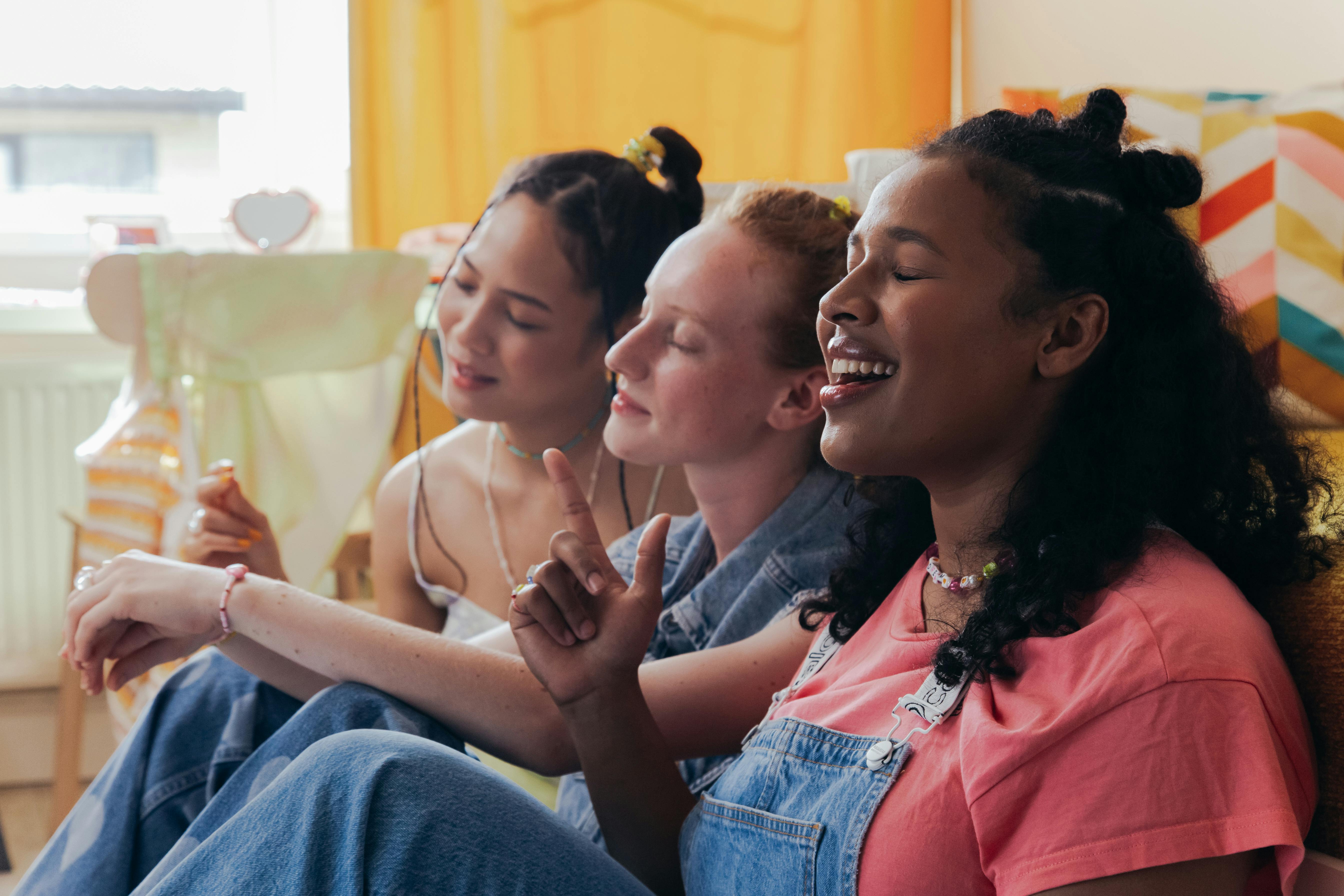
I love to sing, especially harmonies. In a large choir or a small group, the harmonies provide depth that even the loveliest melody can’t produce on its own.
Imagine a song that begins with a simple intro by piano and guitar. After a few beats, the lead vocalist starts the first verse with the lone melody line. It’s good, but something is missing.
Through the first chorus and second verse, other instruments join in, and low and high harmonies are layered in strategically one by one. By the time the song reaches the second chorus, all the vocal parts are in, and the listener is totally swept up in the song. Harmony has that kind of power.
Especially in a small group, vocal parts are expected to sing different notes. Your notes should complement, not match, what the other parts are singing. In practice, often this means you stand close to another vocalist and really listen to make sure what you’re singing isn’t clashing with whatever they’re doing. If it does, you try alternate notes to find something that works for everyone and produces a great overall sound.
Everybody brings what they have – high or low range, or a special tone – to the mix. The fact that all the players bring something different is the beauty of it. The process might sound tedious, but working to make different voices blend together is actually a lot of fun.
What if the way we make musical harmonies could help bridge the gap between people in the world outside of music?
Recent polls show Americans are as divided as ever on a wide range of issues, including politicians on both sides of the aisle, DOGE, Ukraine, the cost of living, immigration, even whether you should own a Tesla. You name it, there’s a debate about it.
We disagree about a lot of things. But thinking differently isn’t new. We’ve had differences of opinion for as long as we’ve had the ability to think for ourselves.
What’s new(er) is how we now characterize another person just because they have a different viewpoint than ours. We tend to see them as a bad person, not just a decent human being who happens to think differently about a topic than we do.
Villainizing others just because they disagree with us is dangerous. It shuts down meaningful conversation. When we think of someone else as inherently evil or stupid, it’s harder to see how we can work together to compromise or solve problems – how will they change if it’s just who they are? – so we stop trying.
What if we saw our interactions with each other as harmonies to be made instead of battles to be won? Would we have a better chance at meaningful change that everyone would benefit from?
We all have different opinions and approaches to what’s happening around us. Your way might not be my way, but that doesn’t necessarily make either of us wrong. Maybe we’re just different.
And that makes sense, doesn’t it? We grew up in different communities with different families and support systems. We’ve faced different hardships and challenges, all of which have shaped us as people. So why should we expect to have the same viewpoints about everything?
Your unique history makes you who you are. Your lived experience gives a certain perspective on an issue, as does mine, so let’s at least hear each other out. Instead of walking away thinking the other person has lost their mind, try to stick around and stay curious. Ask questions like “why do you think that?” or “how did you come to that perspective?” Keep talking (and listening).
You might not change my mind, and I might not change yours, but at least we can have a better understanding of where the other is coming from. And maybe that understanding leads to a compromise that works for us both, instead of each of us digging our heels in and getting nowhere.
In music and in life, finding the right harmony with others takes hard work. You tolerate a lot of bad note combinations to get to the right ones. But you keep trying because a better world for all of us is worth it.
And in the end, when harmony is done well, the result is truly magical.
