
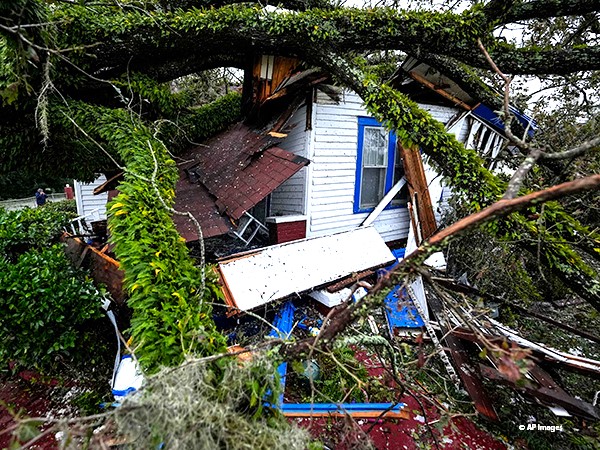
When Sam Perkins couldn’t reach his aging parents 48 hours after Hurricane Helene hit their community in remote western North Carolina last week, he decided to go looking for them. But still several miles from their house, the road was impassable, so he stopped his car.
Undeterred, Sam left the car at the base of the mountain and started walking in the direction of his parent’s home. He hiked eleven miles – over fallen trees, deep mudslides, debris and 2200 feet of elevation – to get to them.
Sam was relieved to find his parents unharmed but cut off from the outside world, with water in short supply. Unfortunately, their situation isn’t unique.
The storm’s devastation spreads across at least six Southeastern states. Well over 100 people are confirmed dead and that number is expected to rise with so many still unaccounted for. The water and wind decimated whole towns and washed roads away. Power lines and cell towers are down, and people struggle to get basic food and water almost a week after the storm swept through. The needs are dire.
We can’t all hike mountains or be boots on the ground to help the huge number of people negatively impacted by Hurricane Helene. But don’t let your distance or lack of personal connection to those affected keep you from doing something.
Long-time children’s advocate Mr. Rogers famously said in times of need, look for the helpers. And right now, the helpers need all the help we can give.
How can you help?
FEMA encourages donations to verified relief organizations to ensure the most needed supplies get delivered to those who most need them. Charity Navigator can help you vet groups soliciting donations (www.charitynavigator.org/discover-charities/where-to-give/hurricane-helene-2024/).
Many organizations prefer a cash donation so they can purchase exactly what’s needed, often at a bulk discount. But if specific items are requested, try to stick to their list so items that can’t be used don’t go to waste (eg., canned goods without a pop top for people with no can opener, or powder baby formula for families without easy water access).
Here’s a list of suggestions to get you started and the type of assistance provided:
- American Red Cross (www.redcross.org) – food, shelter, supplies, emotional support through Disaster Mental Health services
- World Central Kitchen (www.wck.org) – fresh food and water
- Save the Children (www.support.savethechildren.org) – hygiene kits, diapers, baby wipes, classroom cleaning kits, restoring schools and childcare centers
- Baby2Baby (www.donate.baby2baby.org/give/625150/#!/donation/checkout) – diapers, formula, blankets, hygiene products
- Western North Carolina Disaster Relief Fund (www.paypal.com/donate?campaign_id=REK4H7UXUPX22) – supplies specifically for the small mountain towns and communities in western North Carolina
- American Humane Society (www.humanesociety.org) – animal vet care, supplies, transportation of adoptable animals from one region to another
Your donation – large or small – truly matters. Together, the many people and communities affected by Hurricane Helene will get through this. Thanks for helping the helpers.
