
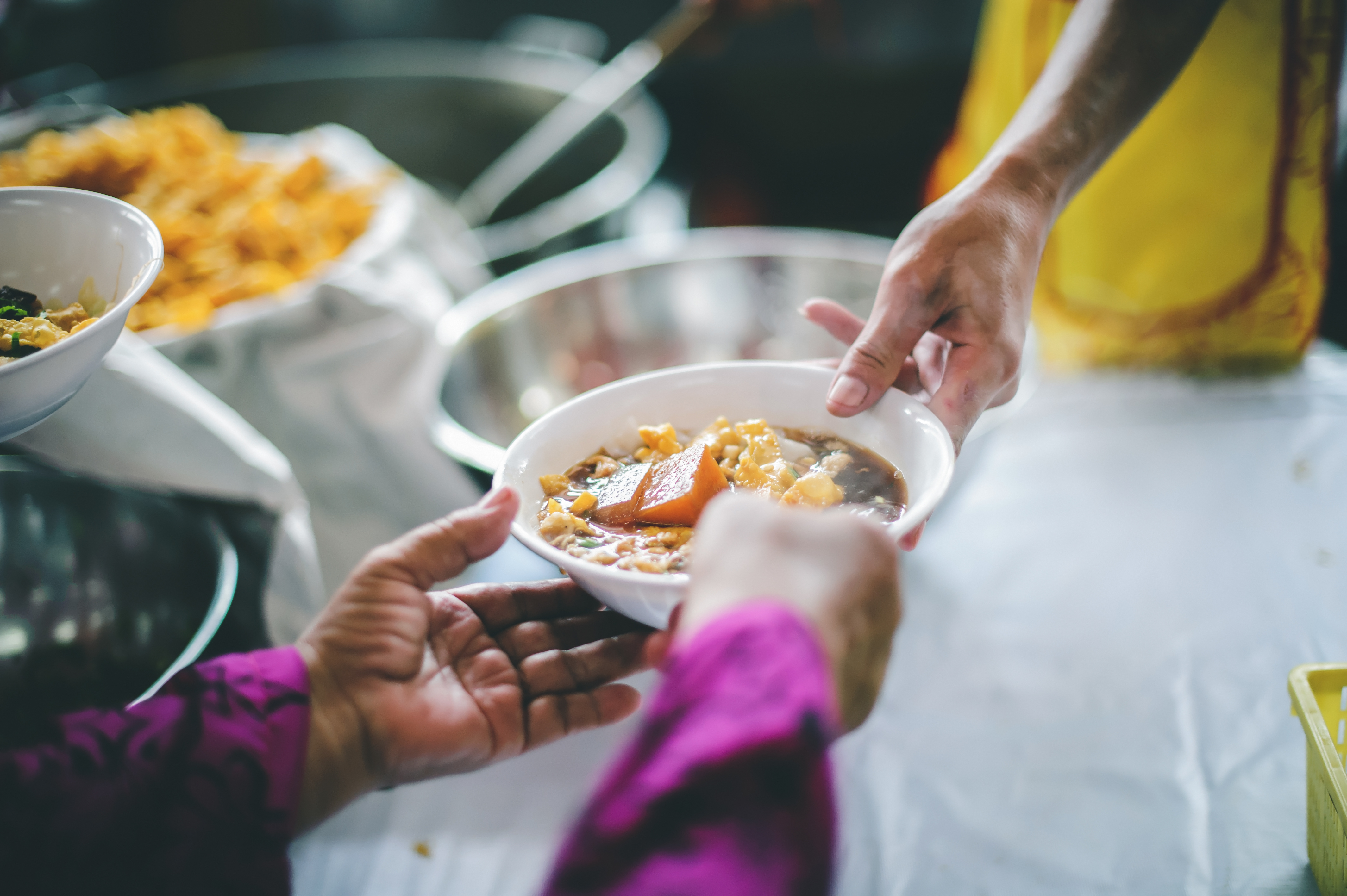
The long line formed around the historic red brick building well before the posted opening time. Those in line waited patiently in the midday sun to be let in. Then one by one, they came into the community hall to see what the cooks had made for Sunday dinner.
Some had been here before and knew the drill. For others, it was their first time dropping by, so they followed the example of the veterans. Either way, they came to be fed. Those who served them hoped they would also feel seen.
Wait staff greeted them cheerfully as they took their seats at round tables of eight preset with water and silverware. Some sat with those they knew. Others came alone and met new people. The wait staff took their food and drink orders and then went to fill them. Heaping plates of hot pulled pork or BBQ chicken, pasta salad, green beans, rolls and cookies came out quickly from the kitchen.
Some were talkative as they ate, and others were quiet. One man talked openly about his brother’s struggle with diabetes and his own doctor’s recommendation that he get more exercise to get healthier. One woman was excited about a job interview she would have the next week and got feedback on what she should wear. She hoped the clothing shop next door would have something appropriate and that this job would provide her the financial support she needed to live in a better place. Another woman had just gotten a batch of fresh strawberries (a rarity in her world) and remembered aloud how she loved them as a child. The wait staff listened to their life stories and told them some of their own.
As the food ran out and closing time came and went, a woman rushed in late. Her face sank when she learned that all the food was gone. The kitchen had served plated food to some of the regular local volunteers who were helping out that day. When one volunteer saw this woman’s distress, he gave his own plate to her without hesitation so that she wouldn’t leave hungry. He knew what it was to be hungry and chose to show her compassion instead of contempt.
These individuals are unhoused and homeless, but they are not hopeless. And above all, they are human. They have hopes and dreams, but life circumstances have beaten them down. The Sunday community meal is often the only time anyone makes eye contact or really talks with them all week.
Society stigmatizes them, but they are worthy of the respect and dignity that we all need to survive and thrive. Although it seems too small an action compared to the great challenges they face, it was a privilege to serve them and an honor to show them that if only for one hour that week, no matter what else happened, we saw their humanity.
As you interact with those who cross your path at work or home or in your community this week, what can YOU do to show true compassion, without judgment, for someone else?
